The Chairmen of the Mid Ulster Football Association: A Century of Leadership
The Mid Ulster Football Association has been shaped, steered, and safeguarded for well over a century by a remarkable line of chairmen volunteers whose commitment to local football built the foundations of the modern game across Mid Ulster. Their story is, in many ways, the story of the Association itself: resilience, continuity, and an unwavering belief in the value of community football.
The Cordner Era (1924–1954): The Architect of Mid Ulster Football
No figure looms larger in MUFA’s history than Thomas Cordner, who presided over the Association for more than thirty years. From the early 1920s through to the mid‑1950s, Cordner chaired almost every Annual General Meeting, guiding the Association through wartime disruption, post‑war rebuilding, and the expansion of competitions such as the Mid Ulster Cup and Shield.
Under his leadership, MUFA developed its administrative backbone formalised rules, structured competitions, and the culture of volunteer governance that still defines the Association today. Cordner’s tenure remains the longest in MUFA history, and his influence can still be seen in the Association’s traditions and procedures.
Transition and Modernisation (1955–1966)
Cordner’s later years saw the emergence of new leaders who would carry MUFA into a more modern era. John Blanke, serving first as Vice‑Chairman, stepped in during periods of Cordner’s illness and after his passing in 1956. Blanke’s steady stewardship ensured continuity at a time of significant change.
He was succeeded by R. Peel, who chaired the Association through the late 1950s and early 1960s. Peel’s leadership coincided with a period of growth in local football, with more clubs entering competitions and administrative demands increasing. His calm, methodical approach helped stabilise MUFA as it adapted to a busier football landscape.
The McKee Years (1967–1977): A Decade of Stability
The late 1960s ushered in the era of D.W.R. McKee, whose decade-long chairmanship brought consistency and structure. McKee presided over a time when Mid Ulster football was expanding rapidly, with more competitions, more clubs, and greater expectations placed on the Association.
His leadership style was practical and disciplined, and he became known for his fairness and attention to detail qualities that helped MUFA navigate the increasingly complex demands of local football administration.
The Marshall Era (1978–1987): A Modern Administrator
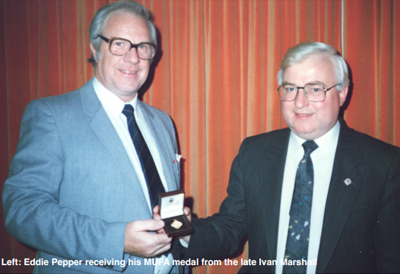
Few chairmen have left as visible a mark on MUFA as Ivan Marshall, who chaired the Association for an extraordinary ten consecutive years. Marshall’s era was defined by modernisation: clearer governance, improved communication with clubs, and the strengthening of MUFA’s role within the wider Irish Football Association structure.
He presided over the introduction of new administrative practices, the refinement of competition rules, and the professionalisation of MUFA’s annual reporting. Marshall’s leadership bridged the gap between traditional volunteer administration and the more structured governance expected in the modern game.
A New Generation of Leaders (1988–2007)
The late 1980s and early 2000s saw a succession of respected chairmen who each contributed to MUFA’s continued development:
- Eddie Pepper
- Noel McClure
- Isaac Gilkinson
- Alan Willis
These chairmen guided the Association through a period of change in local football the rise of youth development, improvements in facilities, and the increasing importance of compliance and governance. Their leadership ensured MUFA remained strong, relevant, and connected to the needs of its member clubs.
The Modern MUFA (2008–Present)
The 21st century has brought new challenges and new expectations, and MUFA’s recent chairmen have risen to meet them.
- Alan Willis
- Eddie Pepper
- Nigel Cooke
- Norman Livingston
- Sean O’Neill
- Maurice Johnston
- Paul Suckling
- Mervyn Wheatley
These leaders have overseen digital transformation, safeguarding and insurance requirements, competition restructuring, and the increasing administrative demands placed on local football bodies. Their work has ensured MUFA remains compliant, transparent, and forward‑looking while still rooted in the community values that have defined the Association since 1887.
A Legacy of Service
Across more than a century, MUFA’s chairmen have shared one defining characteristic: service. Every chairman from Cordner’s decades of leadership to Wheatley’s modern stewardship has given their time freely, often quietly, always with the intention of strengthening football in Mid Ulster.
Their collective legacy is the stability, fairness, and continuity of the Association itself. MUFA’s competitions, rules, and reputation have been built not by committees or structures alone, but by the individuals who stepped forward to lead.
Today, as MUFA continues to evolve, it does so on the foundations laid by these chairmen volunteers whose dedication shaped the footballing identity of Mid Ulster for generations.